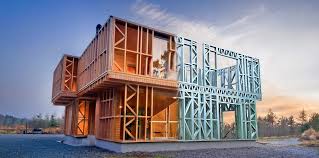
Cold-Formed Steel vs Wood Framing Cost Per Square Foot for 4-6 Story Apartments
How CFS and Wood Framing Costs Compare for Mid-Rise Apartments
Cold-formed steel (CFS) framing and wood framing land within $3-5 per square foot of each other for 4-6 story apartments once you factor in construction insurance, fire protection assemblies, and schedule impacts per BuildSteel.org analysis and RSMeans 2024 data for the Boston market. The critical variable is building height: at four stories, wood wins on cost; at five stories, the two systems reach near-parity; at six stories, CFS saves $13-15 per square foot because wood-framed buildings trigger expensive concrete podium construction under IBC Table 504.3 height limits.
Any cost comparison that ignores building height is incomplete. IBC construction type requirements create a cost inflection point at five stories that fundamentally changes the economics of mid-rise multifamily framing.
| Building Height | Wood Framing ($/SF) | CFS Framing ($/SF) | Cost Advantage |
|---|---|---|---|
| 4 Stories | $14.50-16.50 | $24.00-26.00 | Wood by ~$9/SF |
| 5 Stories | $23.50-29.50 | $24.50-26.50 | Near parity |
| 6 Stories | $37.00-41.00 | $24.50-27.00 | CFS by ~$13/SF |
Source: RSMeans 2024, Boston market. Material pricing volatility may affect current figures.
Cost Per Square Foot by Building Height per RSMeans Data
Four-story buildings where wood maintains advantage
Wood framing runs $14.50-16.50 per square foot at four stories, while CFS comes in at $24.00-26.00 per square foot per RSMeans 2024 Boston market data. Four-story buildings qualify for Type IIIA or Type VA construction under IBC Table 504.3, allowing combustible framing without additional fire-resistive layers. At this height, wood is the stronger economic choice.
Five-story projects at cost parity threshold
At five stories, wood framing jumps to $23.50-29.50 per square foot because Type IIIA construction requires fire-retardant-treated (FRT) lumber, additional gypsum layers for fire ratings, and frequently triggers podium construction conversations with code officials. CFS holds steady at $24.50-26.50 per square foot. Five stories is the decision point where developers begin running detailed comparisons between both structural systems.
Six-story structures where CFS delivers $13+/SF net savings
At six stories, cold-formed steel saves approximately $13.42 per square foot over wood framing per BuildSteel.org case studies. The primary cost driver is podium elimination: wood-framed buildings at this height require a Type IA concrete or steel podium at the first floor, adding $12-15 per square foot in construction cost plus 8-12 weeks of schedule time. CFS framing qualifies as non-combustible per ASTM E136 testing, enabling Type IIB construction that eliminates the podium requirement entirely.
Why IBC Construction Type Requirements Create the Five-Story Cost Breakpoint
Type IIIA and Type VA height limits per IBC Table 504.3
Type IIIA construction permits wood-framed buildings up to 85 feet with sprinkler increases per IBC Section 504.2, translating to roughly six stories. However, Type IIIA requires exterior walls of non-combustible materials and typically mandates FRT lumber for structural framing elements. Type VA allows up to 70 feet with sprinklers and permits combustible construction throughout, with a practical ceiling of four to five stories before enhanced fire protection becomes mandatory.
Type IA podium cost impact on wood-framed mid-rise
When wood framing exceeds practical Type IIIA limits, developers turn to podium construction. This Type IA concrete or steel first floor supports wood-framed stories above, and the cost implications compound rapidly:
- Concrete podium construction: $12-15/SF additional cost over wood framing alone
- Extended schedule: 8-12 weeks for podium completion before wood framing begins
- Foundation upgrades: Increased structural loads require larger footings
- Trade coordination: Concrete and steel trades must complete work before wood framers arrive
Type IIB CFS approach eliminating podium construction
Cold-formed steel framing meets non-combustible requirements per ASTM E136 testing, qualifying for Type IIB construction under IBC Table 601. Type IIB allows buildings up to 75 feet with sprinkler increases per IBC Section 504.2, covering five to six stories without any podium requirement. This single classification difference removes the most expensive component of mid-rise wood construction from the project budget.
Metal Studs vs Wood Studs: Installed Cost for Multifamily Framing
Material and installed cost comparison
CFS studs cost more per linear foot than wood studs on a material-only basis. However, total installed cost shifts once you account for waste, callbacks, and fire protection requirements:
- Material waste: CFS panels generate less than 2% waste compared to 10-15% for dimensional lumber
- Callback reduction: Factory precision per AISI S100 design provisions eliminates warped or twisted members requiring replacement
- Fire protection: CFS assemblies achieve required ratings with fewer gypsum layers than wood per UL-tested designs
- Fastener costs: Standard steel screws versus stainless steel required for FRT lumber connections
Labor productivity and crew size differences
Panelized CFS framing arrives ready for installation, reducing field labor hours by 40-60% compared to stick framing per SFIA data. Factory prefabrication using HOWICK machinery and CAD/3D modeling means panels arrive cut, punched, and labeled with load-bearing calculations validated per AISI S100 effective width method before fabrication begins. Field crews spend time installing rather than measuring and cutting.
UL fire-rated assembly cost requirements
Fire-rated assemblies affect installed cost across thousands of square feet of rated walls and floor/ceiling assemblies. UL Design H514 achieves a 2-hour fire rating with CFS framing using two layers of 5/8" Type X gypsum board at 16" o.c. screw spacing per ASTM E119 testing. Wood framing often requires three gypsum layers or additional fire-resistive treatments to achieve equivalent ratings, adding material and labor cost to every rated assembly in the building.
FRT Lumber Premiums and Structural Capacity Reductions at Five-Plus Stories
Capacity reduction impact per NDS treatment factors
Fire-retardant-treated lumber loses 10-25% of its structural capacity due to treatment chemicals, per National Design Specification (NDS) adjustment factors. Engineers compensate by specifying larger members, closer spacing, or both, increasing material cost and potentially impacting architectural layouts where framing depth is constrained.
Stainless fastener and connector upcharges
FRT chemicals create corrosion concerns with standard galvanized hardware. Most connector manufacturers require stainless steel fasteners and connectors for FRT applications, adding $0.25-0.40 per square foot of framing. On a 50,000 SF building, that translates to $12,500-20,000 in fastener upgrades alone.
Lead time extensions affecting project schedule
FRT lumber requires 6-12 weeks lead time for treatment and kiln drying, compared to standard lumber availability from distribution. Schedule delays carry financing costs and push back occupancy dates—impacts that rarely appear in material-only cost comparisons but directly affect total project economics.
Total Cost of Ownership for CFS vs Wood Over 30 Years
Maintenance and structural repair differentials
Cold-formed steel does not rot, warp, or attract termites. Wood does all three over time. Over a 30-year building lifecycle, wood-framed buildings typically require structural repairs that CFS buildings avoid entirely. The maintenance differential compounds as buildings age, making CFS the stronger long-term economic choice for multifamily developers.
Insurance premium escalation patterns
Non-combustible CFS construction qualifies for lower ISO construction classifications, directly affecting premium calculations throughout the building's operational life. First-year savings may appear modest, but premium escalation compounds over decades of ownership, creating significant cumulative cost differences.
Asset value preservation and durability
Buildings with documented structural durability command higher valuations at refinancing and sale. CFS framing's dimensional stability—with ±1/8" fabrication tolerance versus wood's ±1/4" to ±3/8" field tolerance—translates to fewer finish cracks, better window and door operation, and reduced tenant maintenance requests over the building's lifecycle.
Insurance Savings with Non-Combustible CFS Construction
Quantified 30-year cumulative premium reduction
SFIA data indicates potential insurance savings of up to 38.2% over 30 years for non-combustible construction compared to combustible alternatives. On a typical mid-rise apartment project, cumulative savings can exceed $1 million over the building's lifecycle. The savings stem from ISO construction classification differences between Type IIB (CFS) and Type IIIA (wood).
Fire risk liability and coverage implications
The UMass Amherst fire in November 2025 displaced 232 students when a wood-framed building experienced total structural loss within 30 minutes. Events like this affect insurance availability, deductible structures, and coverage terms for wood-framed multifamily construction across the region, further widening the cost gap between combustible and non-combustible systems.
Schedule Compression Reducing Total Project Costs
Panelized CFS erection speed vs stick framing
Panelized CFS framing reduces framing phase duration by 50-60% compared to stick framing per SFIA project data. Panels arrive labeled, sequenced, and ready for installation, eliminating the field layout, cutting, and assembly time that stick framing requires.
Weather delay mitigation with factory prefabrication
Factory-controlled manufacturing eliminates weather sensitivity during fabrication. In Massachusetts and New England, where 780 CMR amendments apply and winter conditions regularly affect construction schedules, prefabrication translates to more predictable completion dates and reduced weather-related delays.
Accelerated occupancy revenue impact
Every week of schedule compression means earlier tenant occupancy and revenue generation. On a 100-unit project at $2,000 average rent, one month of acceleration represents $200,000 in additional first-year revenue—an offset that erases any remaining material cost premium at five stories and above.
What Separates CFS Framing Providers in Quality and Precision
Engineering and fabrication technology capabilities
HOWICK machinery and advanced CAD software enable complete framed layouts with load-bearing calculations validated per AISI S100 effective width method before fabrication begins. ASCE 7-22 loading requirements are verified for project-specific conditions, ensuring structural performance meets code demands.
Regional code expertise and project support
Massachusetts projects require familiarity with 780 CMR amendments and stretch energy code requirements, including HERS ratings of ≤42 for mixed-fuel and ≤45 for all-electric buildings. Regional expertise affects permit timelines, inspection outcomes, and overall project delivery.
Selecting the Optimal Structural System for Your Mid-Rise Apartment Project
The decision between CFS and wood framing depends on building height, IBC construction type requirements, schedule priorities, and lifecycle cost considerations. For buildings at five stories and above, cold-formed steel typically delivers lower total project cost when podium elimination, insurance savings per SFIA data, and schedule compression factor into the analysis.
Frequently Asked Questions About Cold-Formed Steel vs Wood Framing Costs
How much does cold-formed steel framing cost per square foot for a five-story apartment building?
CFS framing typically costs $24.50-26.50 per square foot for five-story construction in the Boston market per RSMeans 2024 data. Project-specific factors including site conditions, building configuration, and current material pricing affect final costs.
Does cold-formed steel framing qualify for lower insurance premiums in Massachusetts?
Yes. Type IIB non-combustible CFS construction typically qualifies for lower premiums under ISO classifications. SFIA data indicates potential savings of up to 38.2% over 30 years compared to combustible construction types.
What IBC construction type allows a six-story apartment building without a concrete podium?
Type IIB construction with CFS framing allows up to 75 feet—approximately six stories—with sprinkler increases per IBC Tables 504.3 and 504.4. This classification eliminates podium requirements that wood-framed buildings at this height typically trigger.
How do current steel prices affect the cost comparison between CFS and wood framing?
Both steel and lumber experience price volatility. Any cost comparison data older than 6-12 months warrants verification with current RSMeans data or project-specific quotes from fabricators and suppliers.
Can cold-formed steel wall framing be combined with wood floor systems in mid-rise construction?
Hybrid approaches exist but affect construction type classification per IBC. Mixing combustible and non-combustible elements may limit allowable building heights or require additional fire protection assemblies to maintain the desired construction type.
Ready to compare CFS vs wood framing costs for your mid-rise project? AAC Steel's engineering team provides project-specific cost analysis using HOWICK precision fabrication and AISI S100-verified designs. Contact AAC Steel for a feasibility consultation.