Executive Summary
Wood multifamily mid-rise construction in the Northeast has faced unprecedented challenges from 2020-2025. The convergence of catastrophic fire losses, systemic labor shortages, volatile material costs, and chronic quality control failures has fundamentally transformed what was once a cost-effective construction method into a high-risk endeavor requiring extraordinary risk management measures.
Key findings from this analysis:
- 90% of projects experiencing delays (Dodge Construction Network)
- Fire losses quadrupled from 2021 to 2023, reaching nearly $400 million in a single year (WTW Insurance)
- 80% of contractors unable to find qualified workers with 88% predicting conditions will worsen
- Material price surges of 300-650% (lumber up 300%, OSB up 510-650%)
- Quality control failures costing 4-9% of project value in rework and remediation
- Average cost overruns of 10-20% across Northeast multifamily projects
These quantified impacts demonstrate that wood multifamily construction has transitioned from a cost-effective solution to a high-risk endeavor requiring significantly larger contingency reserves than the traditional 10% buffer. The 37.7% collapse in multifamily permits signals that the market has reached a breaking point where traditional approaches no longer produce economically viable projects.
1. Fire Protection Failures Driving Insurance Crisis
1.1 Catastrophic Loss Data (2021-2023)
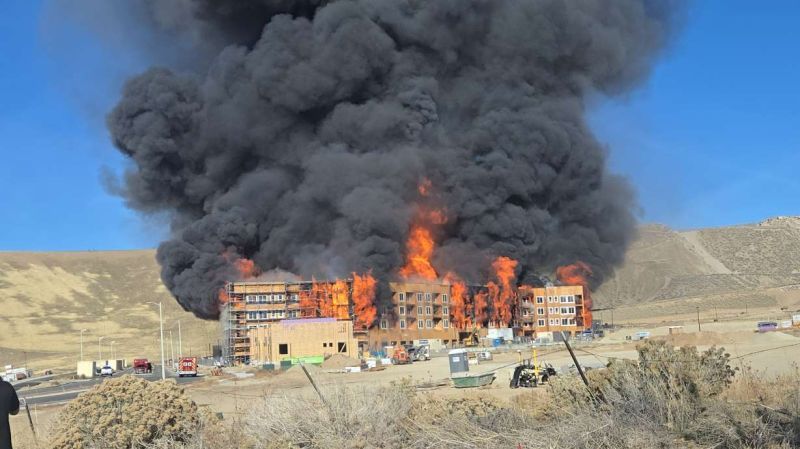
Fire protection problems have emerged as the most financially catastrophic issue facing wood multifamily construction. According to WTW Insurance analysis:
| Year | Substantial Fire Losses | Total Loss Value | Largest Single Loss |
|---|---|---|---|
| 2021 | ~4 incidents | ~$100 million | $25 million |
| 2022 | ~8 incidents | ~$200 million | $50 million |
| 2023 | 16 incidents | $400 million | $100 million |
The 2023 losses nearly doubled compared to 2022 and quadrupled compared to 2021, creating severe insurance market volatility and capacity constraints. Notable incidents include:
- College Park, Maryland (Fuse 47 Project): $39 million in damages from a single construction-phase fire
- Avalon at Edgewater, New Jersey: Fire prompted proposed moratoriums on lightweight wood framing construction
1.2 Root Causes of Construction-Phase Fire Vulnerability
The construction phase represents maximum vulnerability, occurring before sprinklers are operational, before fire stopping is installed, and before the building envelope is fully enclosed. Three critical failures drive this vulnerability:
- Incomplete Fire Sprinkler Systems: Sprinkler systems remain inactive during the highest-risk construction phase, leaving buildings vulnerable before protective systems become operational.
- Fire Stopping and Blocking Failures: Installations are frequently incomplete or missing, allowing rapid fire spread through the structure along void spaces.
- Fire-Rated Assembly Failures: Fire barriers don't extend properly through attic spaces to roof sheathing, and fire-rated gypsum assemblies are improperly installed.
1.3 Structural Vulnerability: Metal Gusset Plate Failure
Metal gusset plates on 2x4 wood trusses represent a hidden vulnerability with catastrophic implications:
| Component | Time to Failure Under Fire Exposure | Implication |
|---|---|---|
| Metal Gusset Plates | 1 minute 20 seconds | Rapid connection failure before suppression possible |
| Wood Trusses | 5-10 minutes | Complete structural collapse before firefighter intervention |
| Full Roof System | 10-15 minutes | Total loss scenario in most construction fires |
1.4 Type III vs. Type V Construction Requirements
The building code distinction between Type III and Type V construction creates significantly different fire protection requirements and cost implications:
| Requirement | Type III (5 Stories Max) | Type V (4 Stories Max) |
|---|---|---|
| Exterior Walls | 2-hour fire-rated | 1-hour (or 0-hour for VB) |
| Interior Bearing Walls | 1-hour fire-rated | 1-hour (or 0-hour for VB) |
| Floor Assemblies | 1-hour fire-rated | 1-hour (or 0-hour for VB) |
| FRTW Requirement | Required for all exterior wall framing | Not required |
| Cost Premium | Substantially higher | Baseline |
The additional story permitted in Type III construction comes at the cost of substantially higher fire protection requirements and material costs, yet fire incidents suggest these enhanced requirements still prove insufficient during the construction phase when most catastrophic fires occur.
2. Structural Defects from Wood Shrinkage
2.1 Quantified Shrinkage Data
Wood shrinkage has emerged as the dominant structural defect mechanism in mid-rise wood construction. IBC Section 2304.3.3 explicitly requires that wood walls cannot support more than two floors and a roof unless shrinkage analysis is performed and approved by the building official.
| Building Height | Cumulative Vertical Shrinkage | Per-Floor Shrinkage |
|---|---|---|
| 4 Stories | Approximately 5/8 inch | ~1/4 inch or more |
| 5 Stories | Approximately 7/8 inch | ~1/4 inch or more |
| 5-6 Stories | Exceeding 1.25 inches | Variable by floor |
This shrinkage occurs as wood moisture content drops from the typical 19% maximum at installation to 7-15% in-service moisture content after building conditioning. Platform framing concentrates shrinkage at wall plates, floor joists, and rim boards — precisely the locations where cross-grain dimensional changes create maximum structural impact.
2.2 Analysis of Wood Structure Failures
Analysis of 127 wood structure failures revealed the following distribution of root causes:
| Failure Category | Percentage of Failures | Responsible Party |
|---|---|---|
| Design weaknesses or lack of strength design | 41.5% | Designers (50% total) |
| Poor erection principles | 14.1% | Building site personnel |
| On-site alterations | 12.5% | Building site personnel |
| Insufficient design for environmental actions | 11.4% | Designers |
| Wood quality or production methods | 11.0% | Material suppliers |
Critically, approximately 50% of failures were caused by designers, 25% by building site personnel, and 11% by wood quality or production methods.
2.3 Cascading Failure Categories
Inadequate shrinkage accommodation creates four categories of cascading failures:
Window and Door Issues
- Flashing slope changes causing drainage problems
- Water intrusion at openings
- Jamb and sill separation
Building Envelope Failures
- Brick veneer cracking from differential movement between expanding brick and shrinking wood
- Stucco cracking and weather barrier tears
MEP System Failures
- Rigid plumbing stacks breaking or leaking
- HVAC ductwork separation
- Electrical conduit stress
Structural Connection Issues
- Hold-down device loosening
- Increased shear wall deflections
- Balcony/deck slope reversal causing ponding and accelerated deterioration
3. Building Envelope Defects and Construction Litigation
3.1 Defect Rate Analysis
Water intrusion represents the primary defect category across all multifamily construction studies. LJP Construction Services analysis of 2016-2020 defects revealed:
| Building Type | Deficiency Rate | Comparison |
|---|---|---|
| All U.S. Building Types (Average) | 4.0% | Baseline |
| Multifamily Attached Projects | 6.5% | 62.5% higher than baseline |
Three factors contribute equally to defects, each representing approximately one-third of the defect population:
- Deviations from architectural plans
- Deviations from approved materials
- Deviations from standard field quality
This distribution indicates systemic breakdowns across design compliance, material specification adherence, and workmanship standards.
3.2 Construction Defect Litigation Statistics
A California insurance broker estimated that 80-85% of condominium projects have been sued for construction defects, with multifamily condominiums characterized as "particularly susceptible" to defect litigation.
The VERTEX study analyzing 43 cases from 2012-2019 found that residential cases averaged more than twice as many cited defects as commercial cases.
3.3 Site Civil Engineering Defect Patterns
Site civil engineering defects in residential projects showed disturbing patterns:
| Defect Category | Percentage of Projects Affected |
|---|---|
| Inadequate grade adjacent to foundation | 92% |
| Non-compliant management of concentrated flows | 81% |
| Site structures inhibiting drainage | 76% |
| Improper foundation waterproofing | 59% |
4. Labor Shortages and Cost Volatility
4.1 Labor Availability Crisis
Labor availability emerges as the dominant constraint facing wood multifamily construction:
- 80% of contractors report difficulty finding qualified hourly craft workers
- 88% of contractors predict hiring will remain difficult or get harder in 2025
Critical Staffing Gaps by Position
| Position | Difficulty Finding Qualified Staff |
|---|---|
| Superintendents | 83% |
| Project Managers/Supervisors | 81% |
| Cement Masons | 83% |
| Mechanics | 83% |
| Plumbers | 80% |
| Estimating Personnel | 78% |
4.2 Root Causes of Labor Shortage
- Insufficient investment in construction workforce education and training
- Retirement of experienced workers without adequate replacement pipeline
- Federal funding imbalance: Only $28.3 billion of $139.5 billion postsecondary education budget goes to workforce training — a 4:1 ratio favoring college degrees over construction careers
4.3 Material Price Volatility
Material costs have experienced unprecedented volatility during the 2020-2025 period:
| Material | Price Increase (Peak) | Supply Chain Impact |
|---|---|---|
| Dimensional Lumber | 300% | Severe delays, quality variability |
| OSB (Oriented Strand Board) | 510-650% | Critical shortages |
| Engineered Wood Products | 150-200% | Extended lead times |
| Steel Framing (by comparison) | 40-60% | More stable supply |
5. Quality Control Failures and Rework Costs
5.1 Quantified Quality Impact
Quality control failures represent systematic breakdowns with quantifiable costs:
| Quality Metric | Cost Impact | Source |
|---|---|---|
| Defect costs as % of production value | 10% | Danish, Swedish, Australian studies |
| Rework costs as % of project value | 3.1-6.0% | Malaysian construction research |
| Maximum cost increase from poor quality | Up to 50% | Industry analysis |
| Maximum schedule delay from quality issues | Up to 50% | Industry analysis |
| Annual U.S. rework costs (miscommunication) | $31 billion | FMI/PlanGrid research |
| Global construction costs from bad data (2020) | $1.85 trillion | Industry estimates |
5.2 Design Coordination and RFI Costs
Design coordination failures and RFI backlogs create substantial cost and schedule impacts:
- Design changes drive 7-10% of total project costs
- Design changes contribute to schedule delays in 35-40% of projects
- Individual RFI cost: $1,080 average per RFI
- Collective RFI costs: $859,000 average per project (analysis of 1+ million RFIs across 1,362 projects)
- Average RFI response time: 9.7 days, creating work stoppage or slowdown
5.3 Schedule Performance Statistics
Industry-wide schedule performance data reveals systemic planning and management failures:
| Performance Metric | Statistic | Source |
|---|---|---|
| Projects delayed due to poor planning | Up to 80% | McKinsey |
| Projects completed within 10% of deadline | Only 25% | KPMG |
| Large projects taking longer than expected | 20% longer | Industry average |
| Megaprojects delayed or over budget | 98% | Global analysis |
| Projects experiencing delays globally | 79% | Industry surveys |
Survey respondents identified unrealistic timeline setting as the #1 cause of delays (40%), followed by inadequate initial scope definition, poor scheduling and sequencing, scope changes mid-project, and inadequate risk assessment.
6. Northeast Regional Factors
6.1 Regulatory Burden
The Northeast faces uniquely challenging regulatory conditions that compound construction difficulties:
- Regulatory burden: 40.6% of multifamily development costs (highest in nation)
- Cost premium: 13-25% above national averages
- Permit complexity: Some Northeast cities require physical transport of applications between up to 14 different agencies
- Permit processing times: Doubled from 4 months to 7 months in recent years
6.2 Climate-Related Wood Performance Issues
Northeast climate conditions create specific vulnerabilities for wood construction:
- Freeze-thaw cycles: Can cause up to 51% strength reductions in wood
- Enhanced moisture management requirements
- Extended construction seasons with weather delays
- Material storage and protection challenges
6.3 Market Response: Permit Collapse
The 37.7% collapse in multifamily permits signals that the market has reached a breaking point where traditional approaches no longer produce economically viable projects. With only 2.5% of construction firms reporting projects consistently finish on time and on budget, the industry faces a fundamental choice between transformation and continued deterioration.
7. Critical Interventions Required
The convergence of labor shortages, material volatility, quality control failures, regulatory complexity, and climate vulnerability has created an existential crisis for wood multifamily mid-rise construction in the Northeast. Five critical interventions offer pathways to stabilization:
7.1 Workforce Development
- Shift federal postsecondary education funding from current 4:1 ratio favoring college degrees toward construction career pathways
- Expand apprenticeship programs with clear advancement pathways
- Address perception issues around construction careers
7.2 Design Completion Standards
- Mandate constructability reviews and BIM coordination for clash detection
- Require complete design documentation before bidding
- Target: Eliminate 7-10% of project costs consumed by design changes and $859,000 average per-project RFI costs
7.3 Quality Control Programs
- Implement third-party peer plan reviews
- Require on-site QA/QC inspections during construction
- Mandate water testing of completed assemblies
- Target: Reduce 4-9% of project value consumed by rework
7.4 Permit Process Reform
- Implement coordinated intake systems eliminating multi-agency physical transport requirements
- Adequate building department staffing to reduce permit processing time doubling
- Digital transformation through online portals and digital plan review
- Harmonization of requirements to reduce unnecessary state and local variations from model codes
7.5 Climate-Appropriate Detailing Standards
- Specify enhanced moisture management and proper drainage systems
- Material selection appropriate for freeze-thaw environments
- Mandatory shrinkage analyses for all projects over two stories
8. Conclusion
The quantified data demonstrates that incremental improvements will prove insufficient. When 90% of projects experience delays, fire losses quadruple in two years, cost overruns average 10-20%, and 80% of contractors cannot find qualified workers, the system has moved beyond normal cyclical challenges into structural failure.
The Northeast's 40.6% regulatory burden as a percentage of multifamily development costs, 13-25% cost premium above national averages, and harsh climate conditions causing up to 51% strength reductions in wood exposed to freeze-thaw cycles create a uniquely challenging environment requiring coordinated action across public and private sectors.
Without immediate, comprehensive intervention addressing root causes rather than symptoms, wood multifamily mid-rise construction in the Northeast will continue its trajectory from cost-effective solution to high-risk endeavor that rational developers increasingly choose to avoid.
For alternative construction methodologies that address these systemic risks, contact MP Design Consultants for consultation on Cold-Formed Steel Construction Solutions.
9. References
9.1 Industry Reports and Data Sources
- Dodge Construction Network - Construction Starts Analysis
- WTW Insurance - Wood Frame Construction Fire Loss Reports (2021-2023)
- LJP Construction Services - Defect Analysis (2016-2020)
- VERTEX Study - Construction Defect Litigation Analysis (2012-2019)
- McKinsey & Company - Construction Planning Analysis
- KPMG - Construction Project Performance Analysis
- FMI/PlanGrid - RFI Cost Analysis (1+ million RFIs, 1,362 projects)
9.2 Building Codes and Standards
- International Building Code (IBC) - Section 2304.3.3 (Wood Shrinkage Analysis)
- IBC Type III and Type V Construction Requirements
- Fire-Retardant Treated Wood (FRTW) Standards
9.3 Technical Resources
- WoodWorks - Accommodating Shrinkage in Multi-Story Wood Frame Projects
- JLC Online - Fire Protection for Light Wood Framing
- ProBuilder - Construction Defect Analysis
- ResearchGate - Wood Structure Failure Analysis (127 cases)
About MP Design Consultants LLC
MP Design Consultants LLC provides professional structural engineering services specializing in cold-formed steel construction for residential and commercial buildings throughout New England. With over 30 years of construction industry experience and professional engineering licenses across six states, our firm offers comprehensive design, code compliance analysis, and construction support services.
Our affiliated manufacturing company, AAC Steel, operates CFS panel fabrication facilities in Franklin, MA and Woonsocket, RI, providing panelized wall, floor, and roof systems with robotic assembly technology. CFS construction addresses many of the systemic risks documented in this white paper through non-combustible materials, dimensional stability, factory-controlled quality, and reduced field labor requirements.
© 2026 MP Design Consultants LLC. All rights reserved. This document may be reproduced for educational and professional purposes with attribution.